A recent trip to Belfast exploring the community growing sector
Exploring Public Food Procurement in Northern Ireland: Systems, Gaps and Opportunities
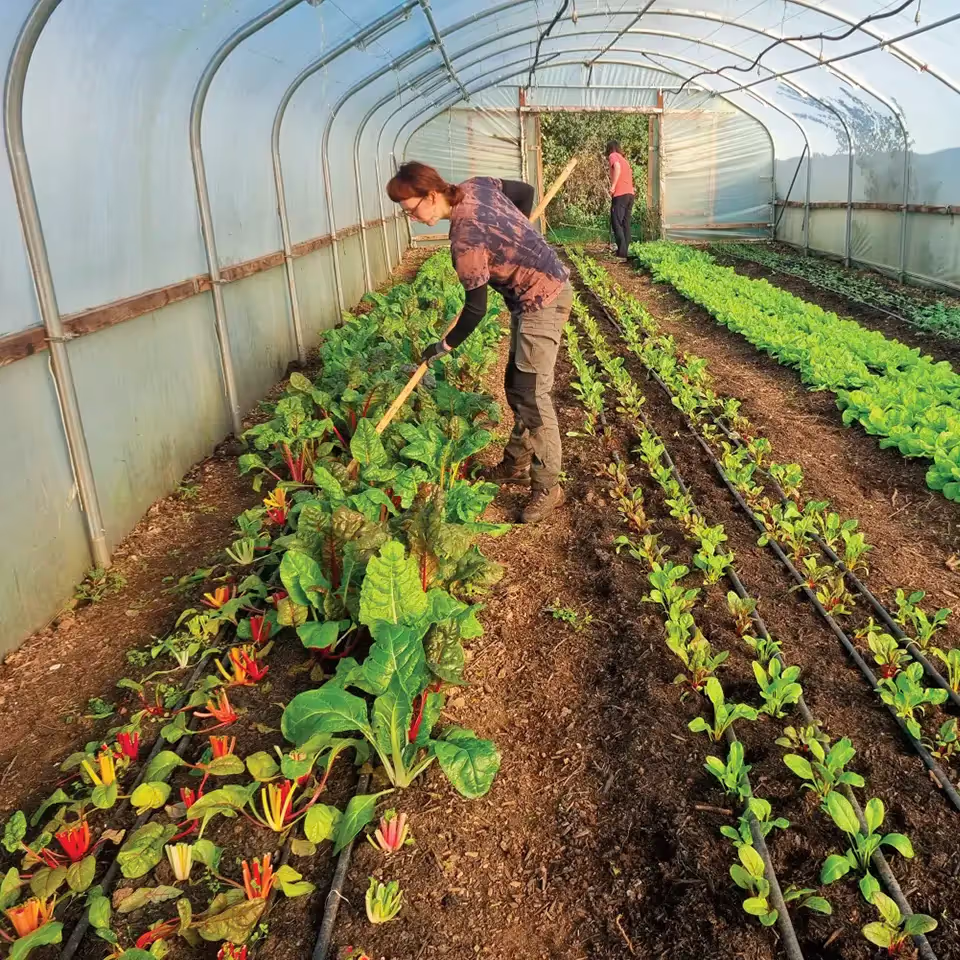
As part of our UK-wide work on public food procurement, we recently travelled to Northern Ireland to begin scoping the policy landscape, meet key stakeholders, and to understand in more detail how procurement operates in practice. Over three days in Belfast and the surrounding areas, we spoke with government officials, industry representatives, local growers, and community food organisations. What emerged was a picture of a highly centralised procurement system, a strong agri-food economy, and a growing but still fragmented movement working toward more local, equitable food systems.
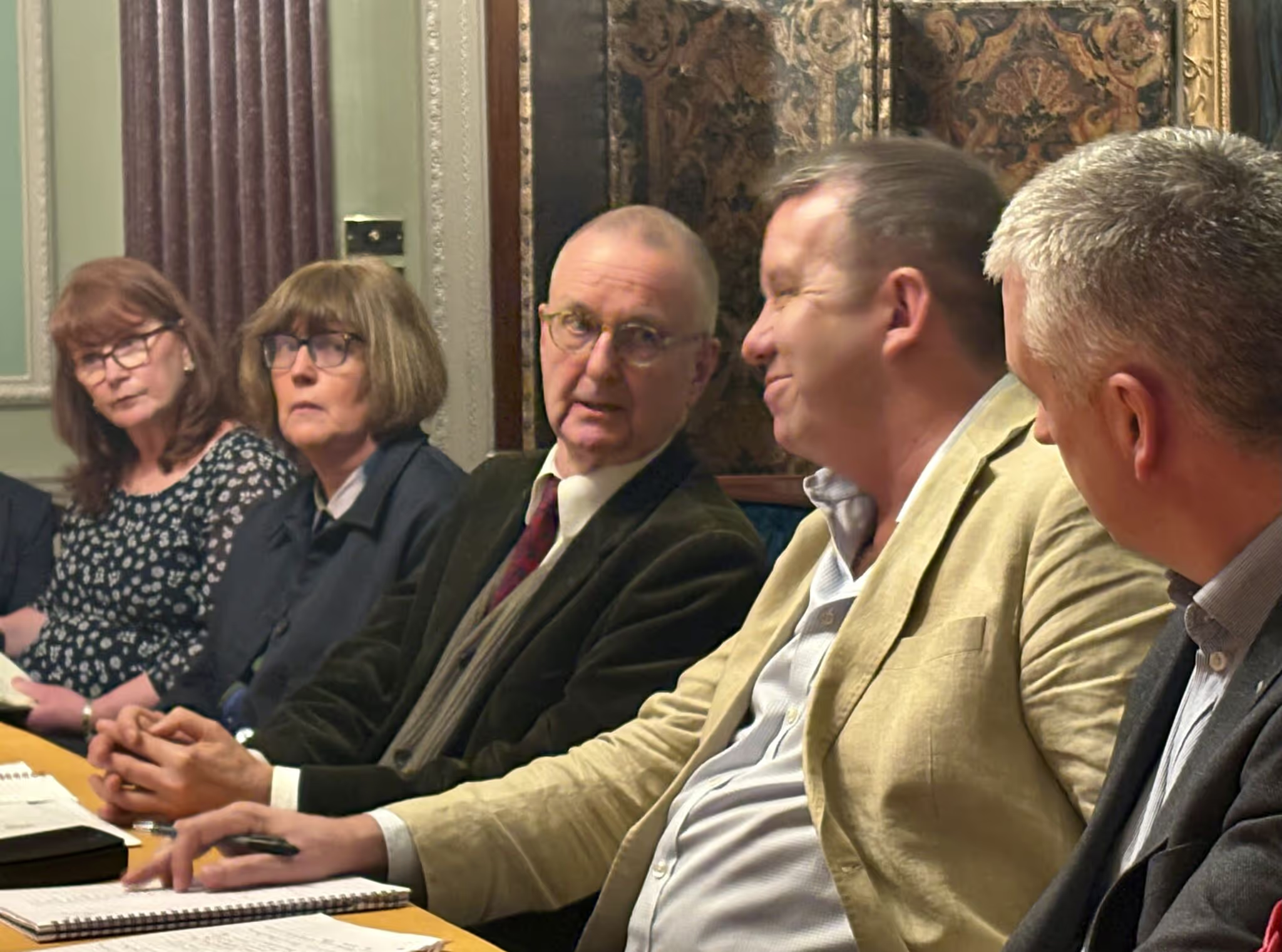
A key early insight came through discussions with officials from DAERA (Department of Agriculture, Environment and Rural Affairs), where we explored how Procurement for Good might support the development of local food policy. Procurement in Northern Ireland is notably centralised, shaped in part by historical governance concerns and a strong emphasis on compliance and risk management. While this creates consistency and control, it can also make it difficult for smaller, local producers to access public contracts. There was strong interest in exploring how this system could evolve, including the potential for a future learning exchange with the Procurement for Good team.
At the same time, we engaged with Food NI, the industry-led organisation representing a sector worth over £5 billion and employing around 100,000 people. Food NI plays a critical role in promoting Northern Ireland’s food internationally and connecting actors across the supply chain, from farmers to retailers and hospitality. However, its focus is primarily on economic growth, export development, and branding. While it sits close to policy discussions—hosting events such as the launch of the Northern Ireland Food Strategy Framework—it is less directly engaged with issues of food access, inequality, or procurement reform. This highlights an important structural feature of the system: strong industry coordination, but comparatively less emphasis on how public procurement could support local and sustainable food systems.
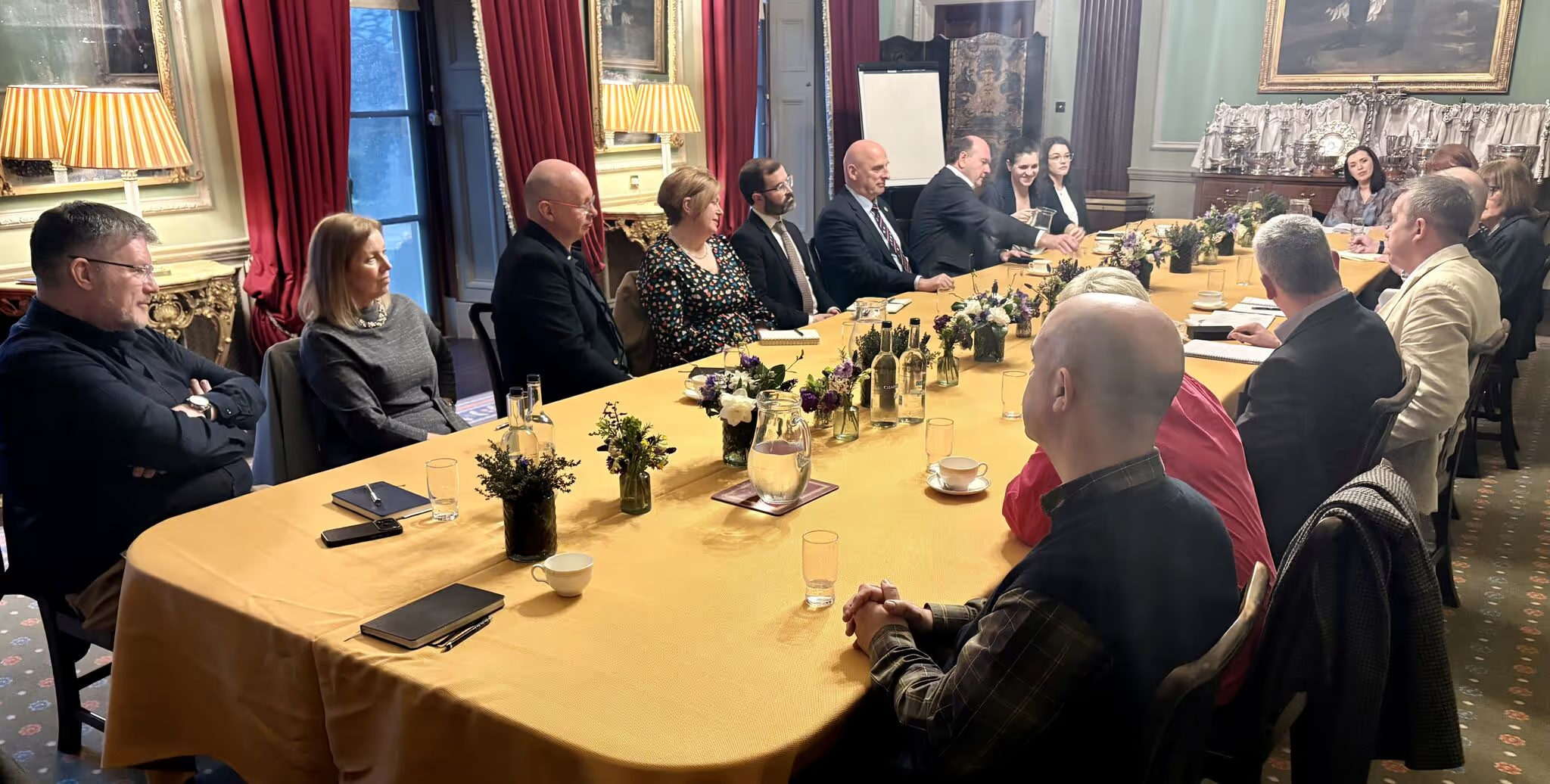
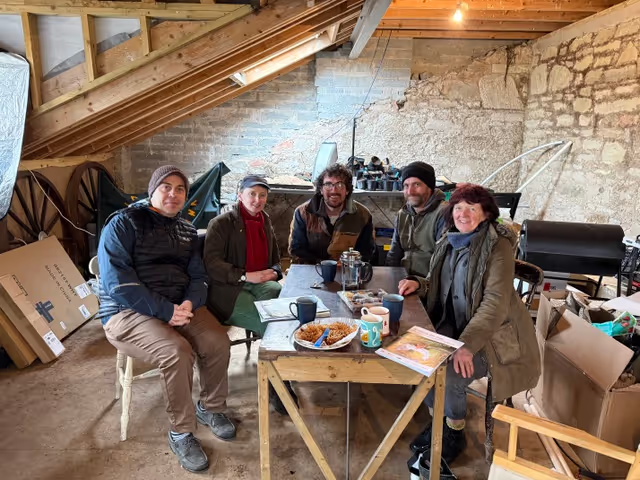
In contrast, our visit to Ben Vista Farm provided a grounded example of what a more localised model might look like. This small-scale agroecological farm operates on just one acre, supplying around 30 households through a Community Supported Agriculture (CSA) scheme and growing approximately 40 varieties of vegetables. With plans to expand to 200 households over the next five years, the farm demonstrates both the potential and the challenges of scaling local production. Notably, it is already exploring ways to supply a local school—currently outside formal procurement frameworks—highlighting both the demand for local food and the barriers posed by existing systems.
We also met with representatives from the Landworkers’ Alliance, a grassroots network of over 2,400 farmers and growers advocating for agroecological farming and food sovereignty. Their work in Northern Ireland focuses on building capacity among small producers—through training, peer networks, and advocacy—while also pushing for systemic change, including better access to land and more supportive policy environments. They provide an important counterbalance to industry-led approaches, foregrounding the needs of small-scale growers who are often excluded from mainstream supply chains.
Another key perspective came from Source Grow, a Belfast-based initiative, which operates as a short supply chain between local producers and urban consumers. Through a subscription veg box scheme supplying 7–8 items per delivery, they aggregate produce from multiple small farms, enabling growers to reach markets they would otherwise struggle to access. Their model—based on fair pricing, minimal intermediaries, and local sourcing— is trying to address the gap between small producers and institutional buyers. They are already supplying a local social care facility on a small scale and are exploring how this could be expanded.
Finally, we engaged with the Belfast Food Partnership, a cross-sector initiative bringing together over 23 organisations and more than 200 stakeholders to develop a whole-system approach to food in the city. Their work is explicitly focused on food access, public health, sustainability, and community wealth building, and they identify public procurement as a key lever for change. This positions them quite differently from Food NI: where Food NI focuses on industry growth and promotion, the Belfast Food Partnership is concerned with equity, resilience, and local economic circulation.
Northern Ireland has a strong and well-organised agri-food sector, but one that is still largely oriented toward large-scale production and export. Alongside this, a growing ecosystem of local producers, intermediaries, and civic actors is beginning to articulate a different vision—one centred on local supply chains, agroecology, and social value. The challenge, and opportunity, for public procurement is to connect these worlds: to create pathways that allow smaller producers to participate, while maintaining the scale and reliability required by public institutions.